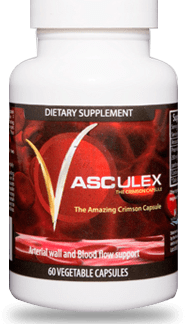


Your heart works hard. You owe it care. Cholesterol abnormalities, including too much LDL and too little HDL, along with inflammation, put heart health at risk. Fortunately, nature provides tools. Bergamot comes from a kind of citrus fruit found in southern Italy, and there’s substantial research to show that bergamot heart health. Vasculex understands this. Vasculex provides Vasculex with Citrus Bergamot — a product designed for those seeking the benefits nature offers.
This blog describes what bergamot is. It reviews research. It explains how to take bergamot for cholesterol. And it describes where Vasculex comes in.
Bergamot Essential Oil (Citrus bergamia) with flavonoids, polyphenols, and special compounds such as melitidin, brutieridin, neoeriocitrin, and neohesperidin. The latter exerts an effect on lipid metabolism. The following are a dozen ways that science has proven bergamot supplementation can:
These are precisely the effects you’re after when it comes to bergamot heart health.
Large-scale reviews confirm these benefits:
All of this research emphasizes that bergamot is not merely anecdote — it’s evidence. That’s crucial for bergamot heart health.
Knowing how bergamot promotes heart health helps you make the best use of it.
Together, these actions render bergamot a potent choice for reducing high cholesterol naturally and promoting heart health.
To get the best results for bergamot heart health, follow these guidelines:
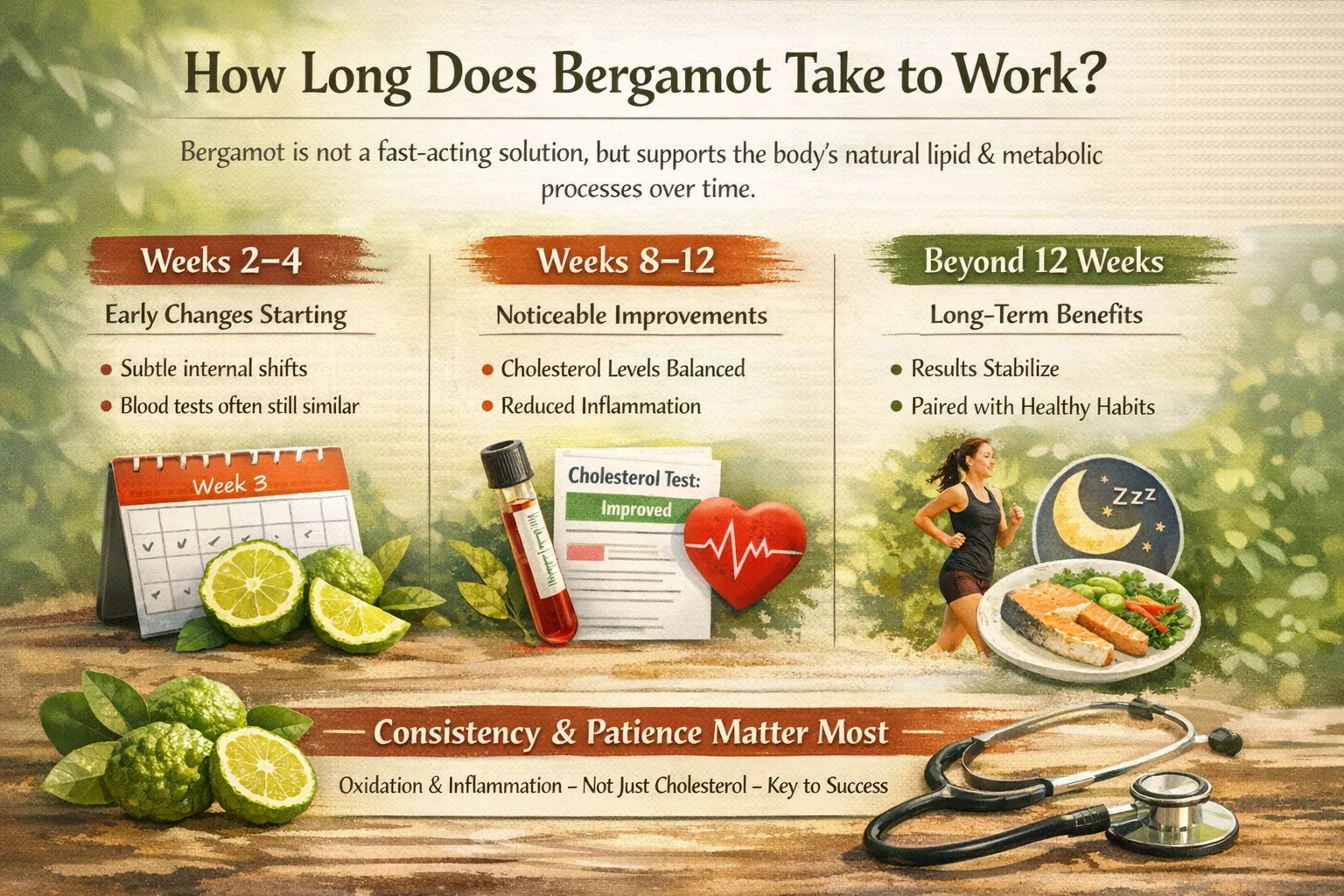
The fact that bergamot doesn’t work right away is actually a sign that it does work. Bergamot encourages the body’s natural lipid and metabolic processes to work better over time, rather than forcing changes.
A typical timeline based on research and real-world use:
Weeks 2–4: Blood tests often still show similar results, but changes inside the body may start to happen.
Weeks 8–12: Most studies look at how inflammation markers and cholesterol levels get better.
After 12 weeks: Benefits are more likely to last when combined with regular habits.
The results depend a lot on diet, activity, sleep, and consistency because bergamot works on more than just cholesterol levels. It also helps blood vessels health by reducing inflammation and oxidation.
Vasculex is the only bergamot heart health supplement on the market, created specifically to capitalize on the belief in bergamot’s potential benefits. What this product does:
Combining Vasculex with Citrus Bergamot provides a scientifically researched and high-quality solution for supporting bergamot heart health. It is to be used in conjunction with a healthy diet and exercise, and general cardiovascular care.
Bergamot does better when aiming for good habits. To promote bergamot heart health, include these:
Along with Vasculex, these actions allow your body to achieve better levels of cholesterol, a better balance of lipid levels in the blood, and stronger overall protection for the heart.
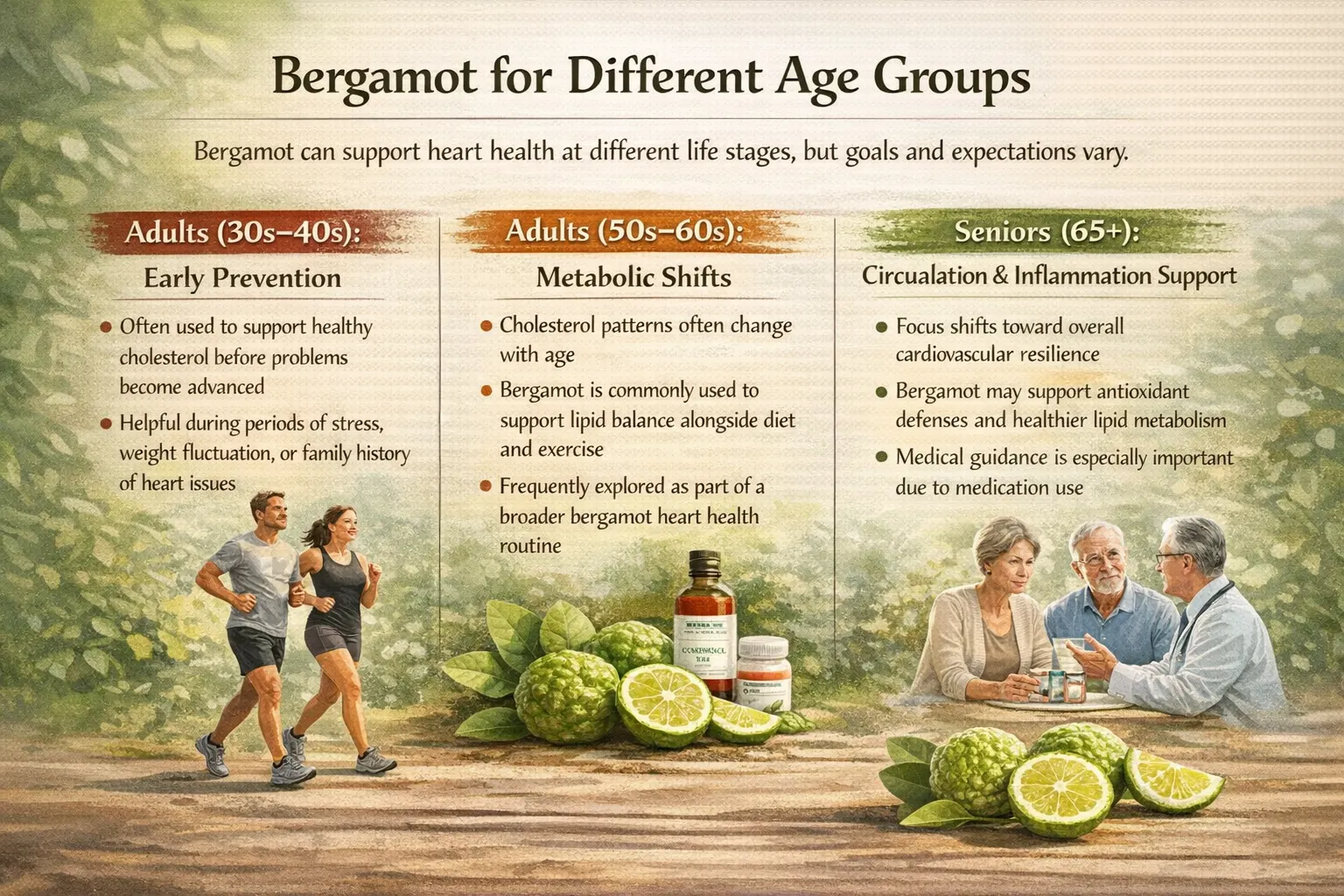
Bergamot can help keep your heart healthy at different times in your life, even though your goals and expectations may be different.
People in their 30s and 40s:
Changes in metabolism for adults in their 50s and 60s
People over 65: Help with Circulation and Inflammation
Although people from numerous populations may experience favorable effects with bergamot, certain individuals may benefit more than others:
That said, anyone considering bergamot would be wise to talk with their doctor, particularly if they have liver disease; are pregnant, breast-feeding, or hoping to become pregnant; or take prescribed medications.
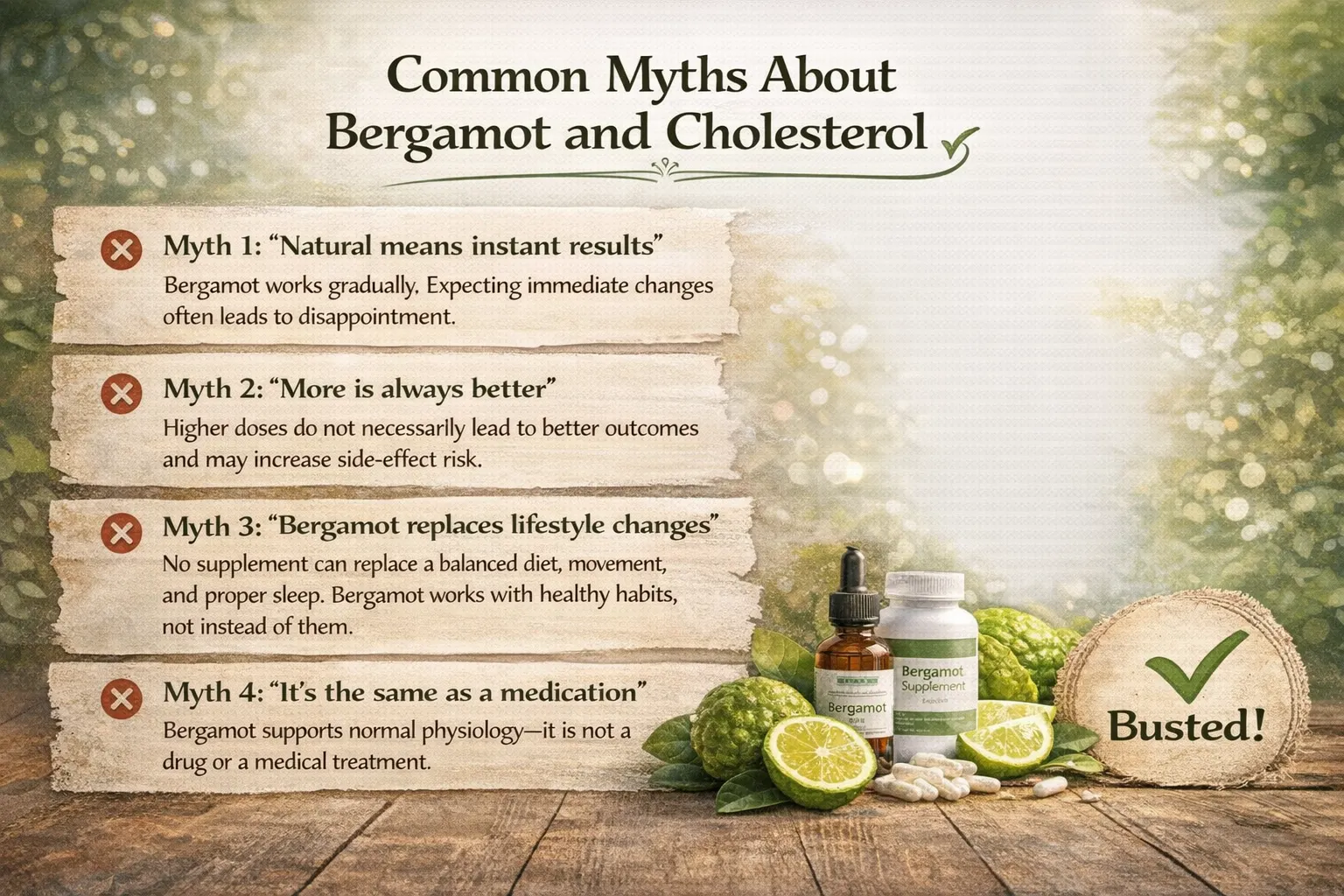
Myth 1: “Results from natural methods happen right away.”
Bergamot works slowly. If you expect changes to happen right away, you will often be let down.
Myth2: is “More is always better.”
Taking more medicine may make side effects more likely and doesn’t always lead to better results.
Myth 3: “Bergamot replaces lifestyle changes”
No supplement can take the place of a healthy diet, regular exercise, and enough sleep. Bergamot doesn’t replace healthy habits; it adds to them.
Myth 4: “It is the same as a prescription drug”
Bergamot is not a drug or medical treatment; it just helps the body work normally.
Here’s a simple plan many find effective for bergamot heart health:
The earlier you begin with bergamot, the better:
When it comes to protecting your heart with bergamot, early and steady action makes a difference.
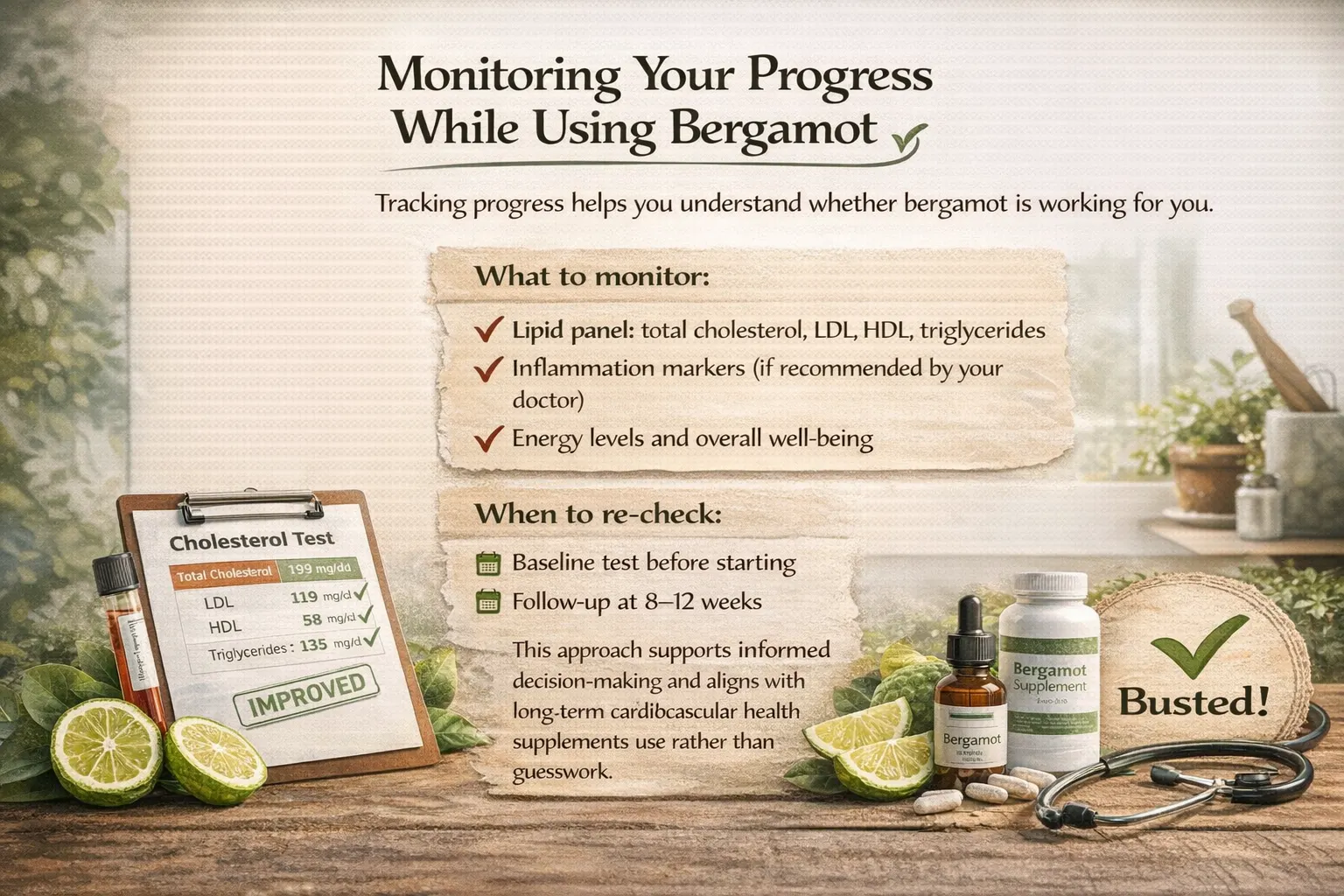
You can find out if bergamot works for you by keeping track of how you’re doing.
Things to watch out for:
When to look again:
This method encourages people to make decisions based on facts, which is in line with the long-term use of cardiovascular health supplements instead of guessing.
Bergamot presents a potential natural pathway to better cholesterol and heart protection. It is indicated for reducing LDL and TC, improving the HDL level, reducing triglycerides, and lowering inflammation.
There is an alternative to the research: Vasculex with Citrus Bergamot. Together with healthy food, exercise, sleep, and being under medical supervision, bergamot can be an essential part of your heart health plan.
Make your heart healthier today.
Choose Vasculex with Citrus Bergamot to support nature’s cholesterol solution. Visit us and order now. Commit to bergamot heart health—nourish your body, balance your cholesterol, protect your heart.Contact us:
A healthcare professional should be consulted about long-term use of bergamot, especially if medications are involved, even though many people use it for long periods of time.
Bergamot is usually well-tolerated with food, which may help with absorption and reduce stomach problems.
People often think of citrus bergamot cholestrol as a way to lower cholesterol, but it also has anti-inflammatory and antioxidant properties that are good for heart health in general.