


Are you ready to take charge of your health and vitality?
With stressors and pollutants, we must arm ourselves with knowledge and strategies to combat the damaging effects of oxidative stress.
That’s where Vasculex comes in. With expert-backed solutions and innovative approaches to oxidative damage control, Vasculex empowers you to safeguard your health and vitality like never before.
But before diving into oxidative damage control, let’s explore what oxidative stress means and how it affects our overall well-being.
Oxidative damage control is an essential aspect of maintaining optimal health and vitality. At its core, oxidative damage occurs when free radicals, unstable molecules in the body, attack, and damage cells, proteins, and DNA.
Oxidative damage control is the body’s natural defense mechanism against these harmful effects.
However, today, our bodies are constantly bombarded with environmental toxins, poor dietary choices, and stress, leading to an imbalance between free radicals and antioxidants.When free radicals overwhelm antioxidants, they begin damaging cells, proteins, and DNA. Over time, this imbalance contributes to inflammation, weakened immunity, accelerated aging, and cardiovascular strain. Because oxidative stress directly affects blood vessels and circulation, antioxidant support plays a crucial role in heart wellness and the effectiveness of cardiovascular health supplements designed to promote healthy blood flow and vascular function.
Recognizing the symptoms of oxidative stress is the first step toward effective oxidative damage control.
Common signs include fatigue, muscle weakness, brain fog, and increased susceptibility to illness.
Long-term oxidative stress has been linked to chronic conditions such as heart disease, diabetes, and neurodegenerative disorders.
We can intervene early and implement strategies to mitigate oxidative damage by paying attention to these warning signs.Chronic oxidative stress has been linked to serious health conditions, including heart disease, diabetes, and neurodegenerative disorders. Incorporating antioxidant-focused habits and targeted best antioxidants supplements may help reduce oxidative burden and support overall vitality.
Implementing lifestyle changes can play a significant role in reducing oxidative stress and promoting overall well-being.
Strategies such as regular exercise, balanced nutrition, stress management techniques, and adequate sleep can help minimize the impact of environmental stressors and support the body’s natural antioxidant defenses.
By prioritizing these habits, we can enhance our resilience to oxidative damage and optimize our health.
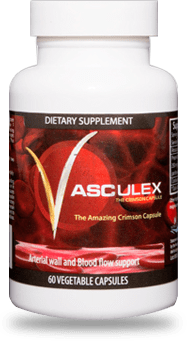
Antioxidants are necessary for oxidative damage control by neutralizing free radicals and preventing cellular damage.
Incorporating antioxidant-rich foods into our diet, such as fruits, vegetables, nuts, and seeds, can provide the body with the necessary nutrients to combat oxidative stress.
Additionally, supplementation of antioxidant vitamins and minerals can further support the body’s defenses against oxidative damage. Understanding the importance of antioxidants empowers us to make informed choices that promote long-term health and vitality.

Some everyday habits and things in the environment can greatly raise oxidative stress by causing the body to make too many free radicals. These things wear down the body’s natural antioxidant defenses and speed up cell damage over time.
A diet high in processed foods and sugars, long-term psychological stress, not getting enough sleep, being inactive, and being around pollution, smoking, and drinking too much alcohol are all major causes of oxidative stress. Exercising too hard or too often without enough rest can also raise oxidative stress levels. Finding and reducing these lifestyle triggers is an important first step in controlling oxidative damage and keeping your health in good shape for a long time.
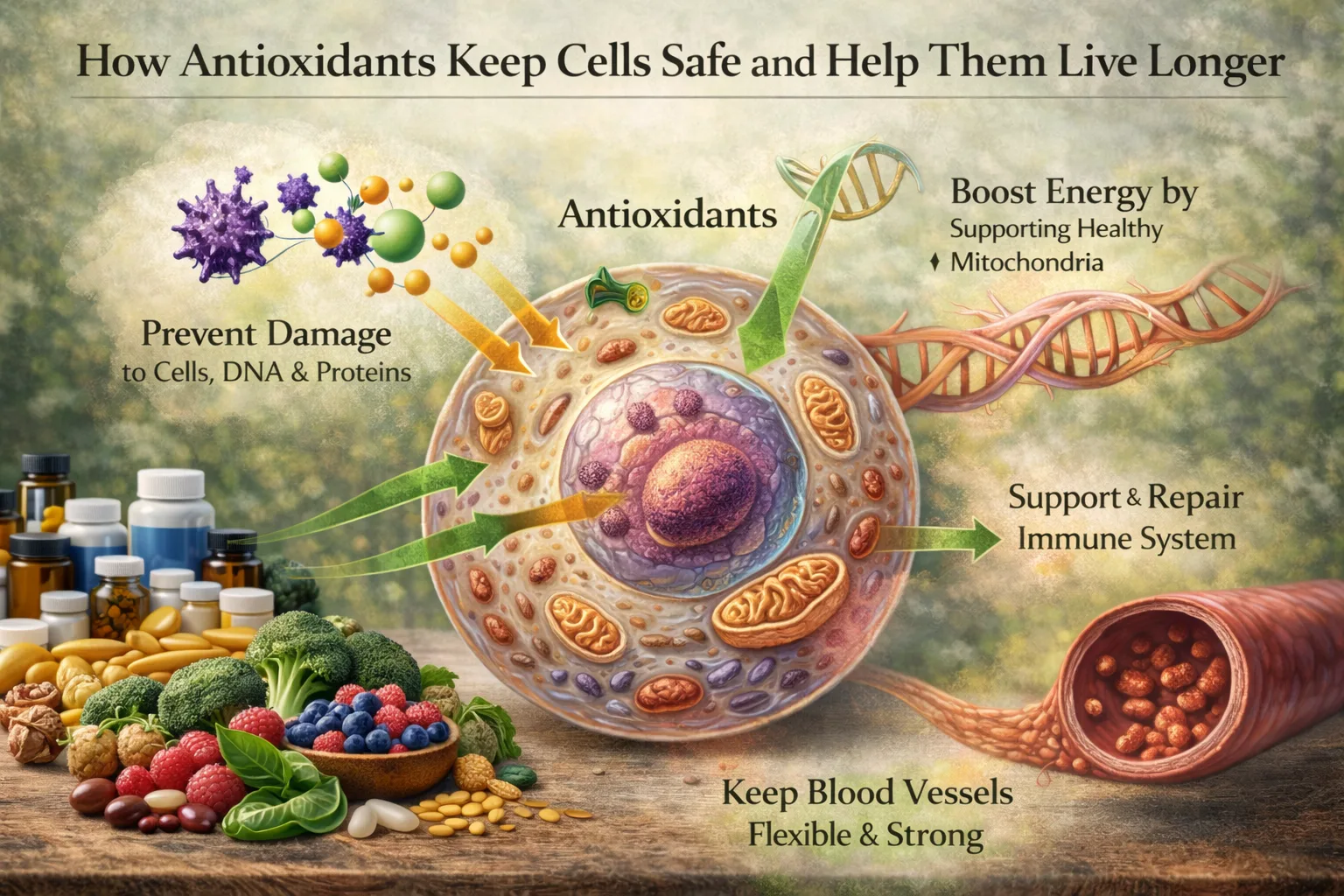
Antioxidants protect the body by stopping free radicals from hurting cells, proteins, and DNA. This protective action helps keep cells healthy, supports healthy blood vessels, and lowers inflammation all over the body.
Antioxidants help cells repair and grow by limiting oxidative damage. These are important steps in slowing down biological aging. They also help keep mitochondria healthy, boost the immune system, and keep blood vessels flexible and strong. When you eat a lot of antioxidants and take supplements that target them, these benefits work together to keep your energy levels up, your heart health better, and your life longer.
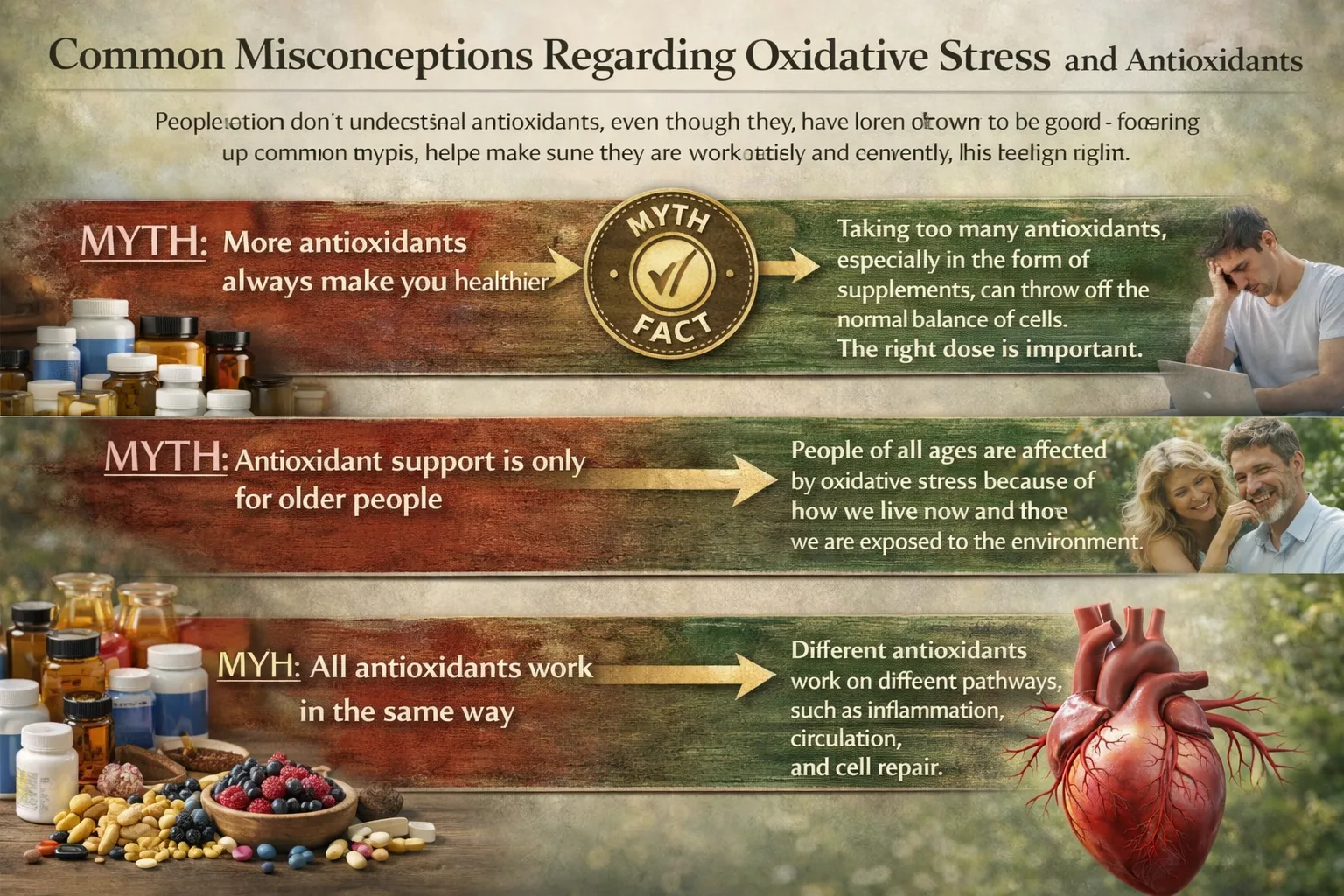
People often don’t understand antioxidants, even though they have been shown to be good for you. Clearing up common myths helps make sure they are used safely and correctly.
Myth: More antioxidants always make you healthier
Fact: Taking too many antioxidants, especially in the form of supplements, can throw off the normal balance of cells. The right dose is important.
Myth: Antioxidant support is only for older people
Fact: People of all ages are affected by oxidative stress because of how we live now and how we are exposed to the environment.
Myth: All antioxidants work in the same way
Fact: Different antioxidants work on different pathways, such as inflammation, circulation, and cell repair.
In conclusion, prioritizing oxidative damage control is essential for maintaining optimal health and vitality.
By incorporating Vasculex’s expert strategies and innovative solutions into your wellness routine, you can defend against the harmful effects of oxidative stress and unlock a lifetime of vitality.
Remember, the power to safeguard your health is in your hands. Choose Vasculex and embrace a life of wellness today.
The body’s natural antioxidant systems, which neutralize free radicals and
repair damaged cells, can repair oxidative damage.
Vitamins C and E, along with minerals like selenium and zinc, are known to
help combat oxidative damage by acting as antioxidants.
While the body has mechanisms to repair oxidative damage, supporting these
processes with a healthy lifestyle and an antioxidant-rich diet is essential.
Complete reversal may not always be possible, but further damage mitigation is
achievable.
Oxidation can be prevented by consuming a diet rich in antioxidants,
avoiding exposure to environmental toxins, exercising regularly, managing
stress effectively, and avoiding smoking and excessive alcohol consumption.
Antioxidants are the primary defense against oxidative stress. Consuming
foods and supplements rich in antioxidants helps neutralize free radicals and
reduce oxidative stress.
Foods high in antioxidants, such as berries, leafy greens, nuts, seeds, and colorful fruits and vegetables, can help reduce oxidative stress and promote overall health.